

December 16, 2025
⬝
Read Time
The field of weight loss surgery continues to transform at a remarkable pace. As a bariatric surgeon practising in Perth, I've witnessed first-hand how technological advancements are changing what we can achieve for our patients. From artificial intelligence that predicts individual weight loss trajectories to robotic systems that enable surgical precision, these innovations are making bariatric surgery Perth safer, more personalised, and more effective than ever before.
Today's patients benefit from decades of surgical refinement combined with cutting-edge digital tools that simply didn't exist even five years ago. Let me share with you some of the most exciting developments reshaping outcomes for people undergoing weight-loss surgery.
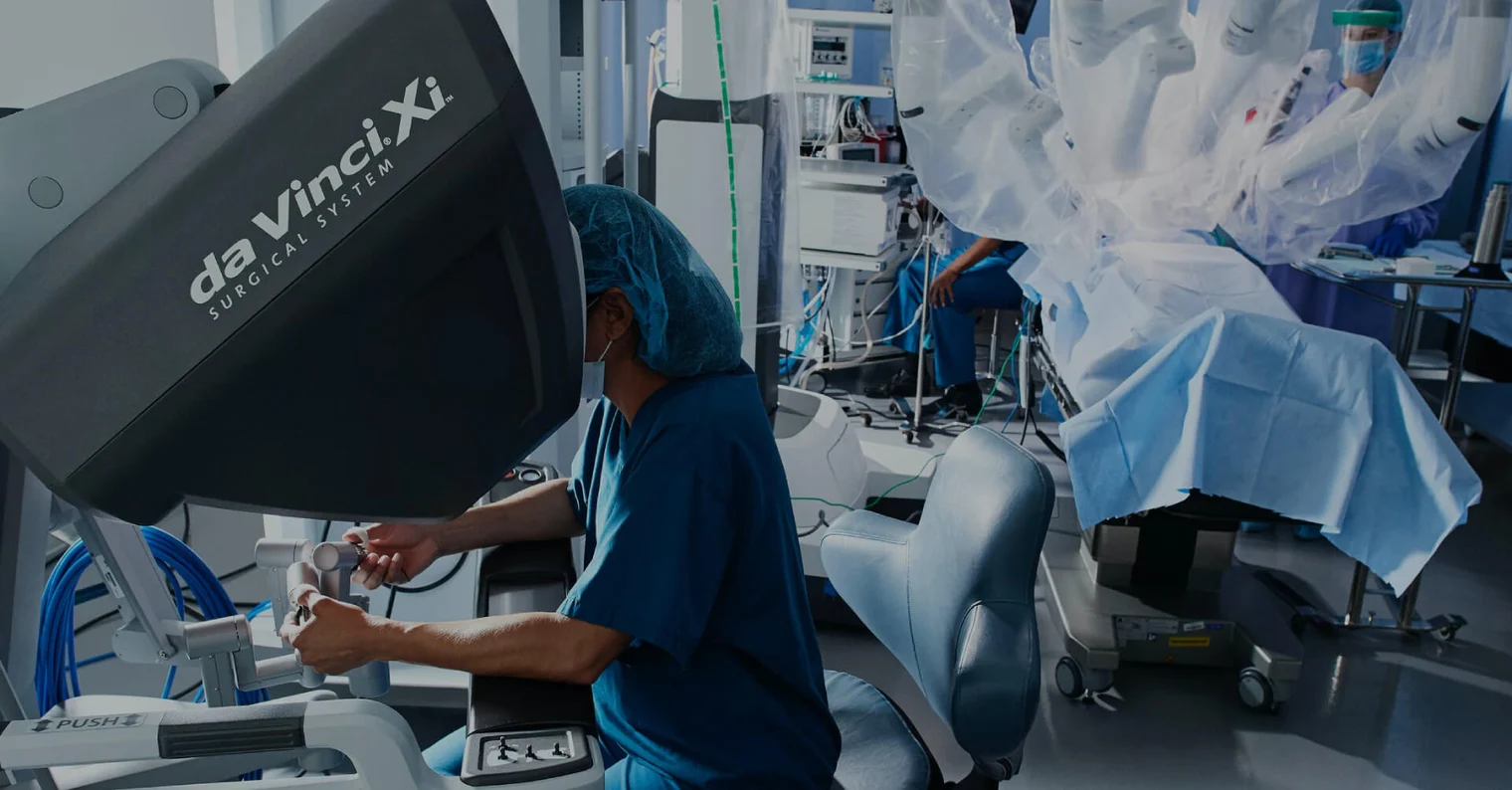
One of the most significant technological leaps in modern bariatric surgery Perth has been the integration of robotic-assisted surgical systems. These platforms provide surgeons with three-dimensional visualisation and instruments that can rotate 360 degrees, far exceeding the capabilities of the human wrist.
The da Vinci Xi surgical system, which we use, translates my hand movements into precise micro-movements of miniaturised instruments inside the patient's body. This technology allows me to perform complex procedures through smaller incisions with remarkable accuracy. For patients, this translates to reduced blood loss, shorter hospital stays, less post-operative pain, and faster return to normal activities.
The precision offered by robotic systems proves particularly valuable during intricate procedures like gastric bypass, where creating secure anastomoses (connections between organs) is critical to both immediate safety and long-term success. The enhanced dexterity and stability these systems provide help minimise complications and improve surgical outcomes.
Beyond robotics, the evolution toward minimally invasive approaches represents another cornerstone of modern bariatric surgery Perth. Laparoscopic techniques, which utilise small incisions and camera guidance, have become the gold standard across most procedures.
Magnet-assisted bariatric surgery represents another emerging frontier. This technique employs magnetically controlled systems to enhance surgical site exposure without requiring additional incisions. Early studies show promising results in reducing operative complications and improving surgeon ergonomics, particularly in patients with challenging anatomy due to significant visceral fat.
These less invasive approaches don't just make surgery easier on patients physically. They also reduce the psychological barrier to seeking treatment, making weight loss surgery more accessible to people who might have been hesitant about major surgery.
The most exciting recent development in bariatric surgery Perth is the application of artificial intelligence to predict individual patient outcomes. A groundbreaking tool developed by researchers at the University of Lille in France, validated across multiple international cohorts, now allows surgeons and patients to visualise expected weight-loss trajectories up to 5 years after surgery.
This AI-powered calculator uses just seven key variables (including age, initial weight, smoking status, diabetes history, and surgery type) to generate a personalised weight loss curve for each patient. The model was developed using data from over 1,500 patients monitored for more than 15 years and validated against more than 10,000 additional patients across Europe, Asia, and the Americas.
What makes this tool particularly valuable is its ability to show patients that weight loss after surgery isn't a straight line downward. Instead, it reveals the natural trajectory: periods of rapid loss, plateaus, and even slight temporary gains. When patients understand these patterns before surgery, they're better prepared psychologically and less likely to become discouraged when their progress doesn't match unrealistic expectations.
From a clinical perspective, this prediction model helps me identify patients who may need additional support or intervention. If someone’s actual weight trajectory significantly deviates from their predicted curve, it may signal complications, the need for medication adjustments, or requirements for nutritional counselling. Early identification of these deviations allows for timely intervention that can prevent more serious problems down the track.
The tool represents a shift toward truly personalised medicine in bariatric care. Rather than applying population-level statistics to individual patients, we can now provide specific, data-driven predictions that account for each person's unique circumstances.
Technology's impact extends well beyond the operating theatre. Modern wearable devices and smartphone applications now enable continuous post-operative monitoring that was previously impossible.
Patients can track their nutrition intake, hydration levels, physical activity, and vital signs through interconnected devices that communicate directly with their healthcare team. This real-time data allows us to identify potential issues, such as inadequate protein intake or dehydration, before they become serious complications.
Some systems now incorporate AI algorithms that analyse patient data patterns and alert clinicians to concerning trends. For example, if a patient's activity level drops or their eating patterns suggest potential complications like dumping syndrome, the system can flag this for review.
These monitoring technologies also enhance patient engagement and accountability. When people can visualise their progress and receive immediate feedback on their behaviours, they’re more likely to adhere to post-operative guidelines. The gamification elements in some apps (achievement badges, progress milestones, and community challenges) tap into psychological motivators that support long-term lifestyle changes.
Advances in genetic profiling and metabolic testing are enabling increasingly personalised surgical approaches. We're beginning to understand how genetic variations influence weight loss success, metabolic improvements, and even complication risks following different surgical procedures. This knowledge allows us to recommend the most appropriate surgery type for each individual patient.
Someone with specific genetic markers might achieve better outcomes with a gastric bypass rather than a sleeve gastrectomy, or vice versa. While this field is still developing, early results suggest that genetic information could become routine in pre-operative assessment within the next few years. Metabolic profiling, which involves examining how a patient's body processes nutrients and regulates energy, provides another layer of personalisation. These assessments help us predict which patients are most likely to achieve remission of type 2 diabetes or other metabolic conditions following surgery, information that can guide both patient expectations and surgical technique selection.
Modern imaging technology has revolutionised surgical planning for bariatric surgery Perth patients. High-resolution CT and MRI scans can be reconstructed into three-dimensional models, allowing me to visualise a patient's anatomy in detail before making the first incision.
This pre-operative planning is particularly valuable for patients with previous abdominal surgeries, unusual anatomy, or organ enlargement. By studying the 3D model, I can anticipate challenges, plan optimal port placement, and mentally rehearse the procedure – all of which contribute to smoother surgeries and better outcomes.
Some centres are now experimenting with augmented reality systems that project these 3D models onto the surgical field during operations, providing real-time anatomical guidance. While still emerging, this technology holds tremendous promise for surgical precision and safety.
As I reflect on these technological advancements, what strikes me most is how they work together. The AI prediction tool helps set realistic expectations and identify patients needing extra support. Robotic systems enable more precise surgery with less trauma. Smart monitoring systems catch problems early. Genetic profiling guides procedure selection. Each innovation amplifies the others, creating a technological ecosystem that supports better outcomes at every stage of the patient journey.
Most of these aren't futuristic concepts. They are tools we're using today at New Me Surgery to deliver care to Perth patients. The weight-loss surgery you might undergo in 2025 is dramatically different from what was available even a decade ago, and the results speak for themselves through improved safety statistics, enhanced weight-loss outcomes, and better quality of life for our patients.
Technology has not replaced the human elements of surgical skill, clinical judgment, and compassionate care; it has become an invaluable partner in delivering the best possible results. As these tools continue to evolve, I'm excited about the future of bariatric surgery Perth and the improved outcomes we'll be able to offer our patients.
If you've been considering weight loss surgery but have concerns about the process or outcomes, I encourage you to learn more about how these technological advances can benefit you personally. At New Me Surgery, we combine the latest innovations with patient-centred care to help you achieve lasting weight loss and improved health.
Our team utilises advanced surgical techniques, evidence-based protocols, and supportive technology to guide you through every step of your journey. We're committed to providing Perth patients with access to bariatric surgery Perth care that delivers real, sustainable results.

.svg)


.svg)
© 2025 New Me. All right reserved.
Follow Us On


Website by OKMG
.webp)


