

December 16, 2025
⬝
Read Time
Bariatric surgery has evolved remarkably over the past two decades, progressing from large open incisions to laparoscopic techniques, and now to an era where robot-assisted surgery represents the pinnacle of surgical precision. As a surgeon practising in Perth, I've witnessed first-hand how the da Vinci system robotic technology transforms what we can achieve for our patients. The integration of the robotic da Vinci surgical system into weight loss surgery has not replaced the surgeon's skill or judgement. What it did was extend our capabilities beyond what human hands alone can accomplish. Let me explain how this remarkable technology works and why it matters for patients considering bariatric surgery.
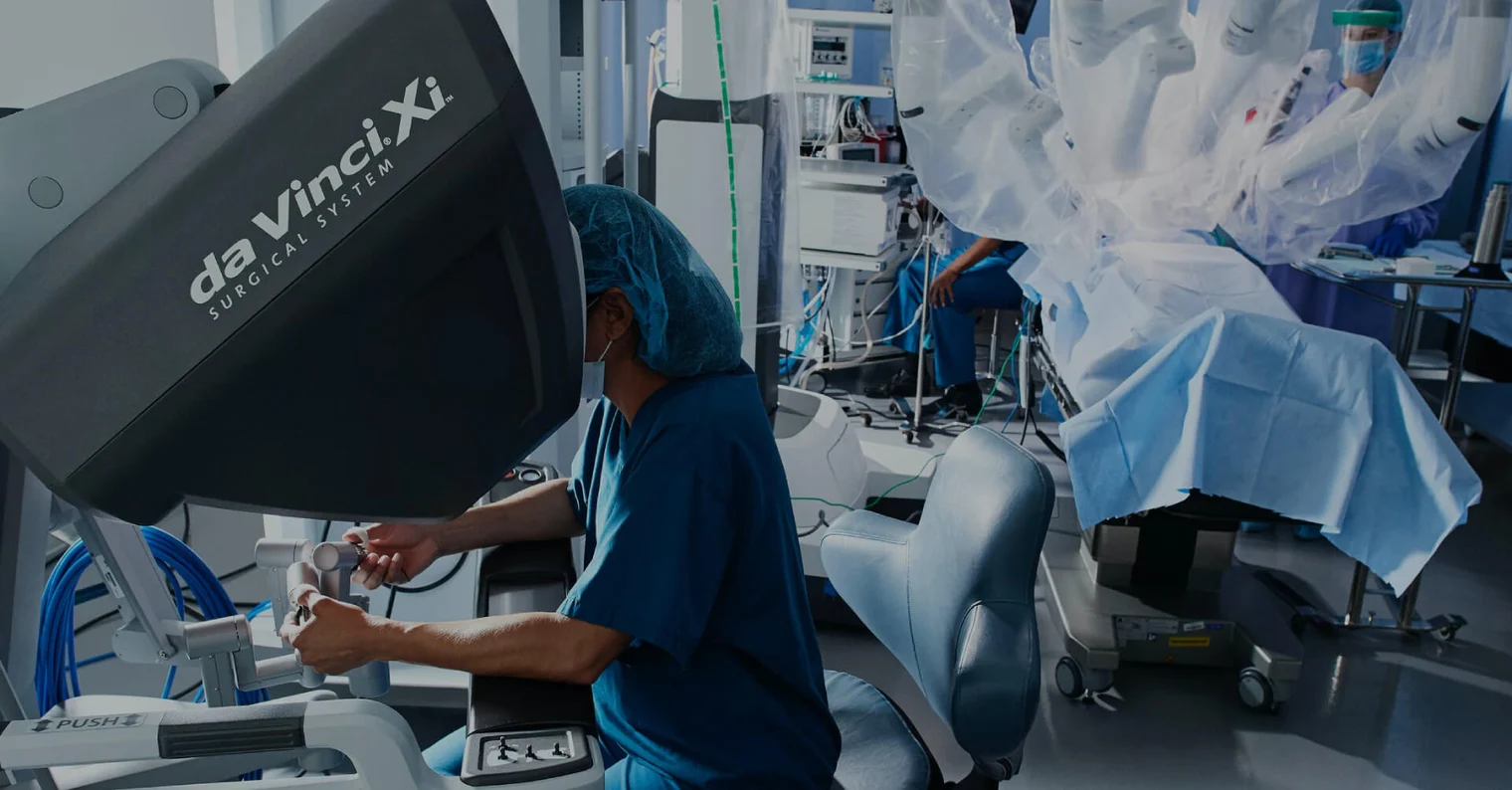
The da Vinci system robot consists of several integrated components working in concert to enhance surgical precision. At its heart lies a console where I sit during the procedure, looking through a high-definition stereoscopic viewer that provides magnified, three-dimensional visualisation of the surgical field. This view far surpasses what traditional laparoscopic cameras can offer. Imagine the difference between watching standard definition television and experiencing 4K ultra-high-definition imagery.
My hands control master manipulators that feel remarkably intuitive. They translate my movements into precise micro-movements of the robotic instruments inside the patient's body. The system scales down my hand motions. A one-inch movement of my hand might result in a one-millimetre movement of the instrument. This motion scaling proves invaluable when working in confined spaces or performing delicate manoeuvres that require extraordinary precision.
The patient cart is positioned beside the operating table. It holds multiple robotic arms that serve as the physical extensions of my surgical intentions. These arms hold the camera and surgical instruments, each with articulating ‘wrists’ that can bend and rotate beyond the capabilities of a human hand. These instruments achieve seven degrees of freedom. This means they allow access to anatomical areas that conventional laparoscopic tools cannot reach.
What makes robot surgery da Vinci particularly remarkable is the tremor filtration system. Natural hand tremors, however slight, disappear entirely as the system translates my movements. This rock-steady precision becomes especially important during critical steps, such as creating anastomoses (bowel joins) during gastric bypass procedures.
The application of the robotic surgery da Vinci system in bariatric surgery encompasses multiple procedures. Gastric sleeve gastrectomy, gastric bypass, duodenal switch, and complex revision surgeries all benefit from robotic assistance, though the advantages become particularly pronounced in more intricate operations.
During gastric bypass surgery performed with the robotic surgery da Vinci surgical system, the enhanced visualisation and instrument articulation allow me to create the gastrojejunal anastomosis - that’s the connection between the small stomach pouch and intestine - with delicate precision. The robotic instruments can suture with accuracy that minimises the risk of anastomotic leaks, one of the most serious potential complications of gastric bypass surgery.
The system's three-dimensional high-definition vision provides depth perception that standard laparoscopic surgery lacks. This depth awareness proves crucial when assessing tissue planes, identifying blood vessels, and ensuring proper tissue alignment during suturing. I can see fine anatomical details that might be difficult or impossible to discern with traditional laparoscopic cameras.
For New Me sleeve gastrectomy and hiatus hernia repair, while the primary tissue division is performed with staplers, the da Vinci robot enhances my ability to address areas requiring suturing or additional haemostasis. The wristed instruments access angles that straight laparoscopic tools cannot reach, allowing me to work around the spleen and along the greater curvature of the stomach with reduced risk of inadvertent injury to surrounding structures.
Revision bariatric surgery, which is an operation to correct or modify previous weight loss procedures, represents the ideal application for the robot surgery da Vinci technology. These complex cases often involve working through scar tissue, identifying altered anatomy, and performing technically demanding reconstructions. The superior visualisation and instrument control that robotics provides can transform an extremely challenging operation into a more manageable one.
The advantages of the robotic da Vinci surgical system extend well beyond the technical specifications that excite surgeons. For patients, these technological capabilities translate into tangible benefits that impact recovery and long-term outcomes.
Smaller incisions represent an immediate visible benefit. While laparoscopic surgery already uses smaller incisions than open surgery, robotic procedures often require even fewer or smaller incisions. This reduction in incision size leads to less post-operative pain, reduced scarring, and a lower risk of incisional complications, such as hernias.
Recovery times also generally improve with robot-assisted surgery. Patients typically experience less tissue trauma because the precise movements cause minimal collateral damage to surrounding structures. This gentler approach often allows earlier mobilisation, shorter hospital stays, and faster return to normal activities.
The enhanced precision of the da Vinci surgical system robot may contribute to lower complication rates. While the surgeon's experience and technique remain paramount, the additional capabilities that robotics provides add another layer of safety to already proven procedures.
Meanwhile, blood loss during surgery tends to decrease with robotic techniques. The magnified visualisation allows me to identify and carefully control small blood vessels before they become problems. The precise movements also minimise tissue tearing or crushing that can cause bleeding. Less intraoperative blood loss translates to smoother procedures and faster recovery.
From my position at the surgical console, performing robotic surgery da Vinci system feels remarkably natural and ergonomically comfortable. Traditional laparoscopic surgery requires standing at the operating table, often in awkward positions, manipulating long instruments that amplify any imprecision in hand movements. This physical strain accumulates over years of practice and multiple procedures daily.
The robotic console eliminates much of this physical stress. I sit comfortably, looking into the three-dimensional viewer with my arms supported, controlling the instruments through intuitive manipulators. This ergonomic advantage means I can maintain peak concentration and steadiness throughout even lengthy, complex procedures. A surgeon who is physically comfortable and not fighting fatigue performs better surgery: a simple truth that benefits patients directly.
The wristed instruments fundamentally change what's possible during surgery. When working deep in the pelvis or upper abdomen, conventional laparoscopic instruments, which move in relatively straight lines, sometimes force surgeons to accept less-than-ideal angles of approach. The articulating instruments of the da Vinci system robotic platform can approach tissues from optimal angles regardless of external port placement, allowing better tissue handling and more precise dissection.
The learning curve for robotic surgery, however, deserves honest discussion. While the technology enhances capabilities, surgeons must invest time and effort in training to use the system effectively. My own journey with the robotic da Vinci surgical system involved formal training programmes, proctored cases, and ongoing skill development. Patients considering robotic surgery should seek surgeons with substantial experience with the platform, because technology alone doesn't guarantee excellent outcomes without the expertise to use it properly.
An important principle of responsible surgical practice is matching the technique to the patient's needs. While the robot surgery da Vinci system offers remarkable capabilities, not every bariatric procedure requires or benefits from robotic assistance.
For straightforward sleeve gastrectomy in patients with favourable anatomy, conventional laparoscopic surgery produces excellent outcomes with proven safety and efficiency. The additional time required for robotic system setup and the associated costs might not provide proportionate benefits in these cases.
But robotic surgery becomes particularly valuable in complex scenarios. These include patients with previous abdominal surgeries creating scar tissue, those with challenging anatomy, revision procedures, or operations requiring intricate suturing and anastomosis creation. The enhanced visualisation and instrument control that robotics provides can transform these complex cases from high-risk procedures into safer, more controlled operations.
Patient-specific factors also influence the selection of the surgical approach. Body habitus, previous surgical history, specific procedure type, and individual anatomical variations all contribute to determining whether robot-assisted surgery represents the optimal choice.
The field of robotic surgery continues to advance at a remarkable pace. The latest iteration, the da Vinci 5 system, introduces artificial intelligence capabilities, haptic feedback that allows surgeons to “feel” tissue resistance, and further improvements in visualisation and instrument design. Haptic feedback is a fascinating advancement. This is because one limitation of the current robotic surgery da Vinci surgical system platforms is the lack of tactile sensation, so surgeons rely entirely on visual cues rather than feeling tissue texture and tension. The introduction of force feedback will provide additional information, improving safety and precision, particularly during delicate dissection or when working with fragile tissues.
As these technologies mature and become more widely available, access to advanced robot-assisted surgery for bariatric procedures will expand. What currently requires significant institutional investment in equipment and training may become more commonplace.
At New Me Surgery, we're committed to providing Perth patients with access to the most advanced surgical techniques available, including the da Vinci surgical system robot for appropriate bariatric procedures. I am trained to use it for applicable surgeries. Our investment in this technology reflects our dedication to providing the highest quality care and optimal outcomes for every patient we serve.
However, technology represents just one element of successful bariatric surgery. Comprehensive pre-operative preparation, expert surgical technique, attentive post-operative care, and your own commitment to lifestyle changes all contribute to achieving lasting weight loss and improved health.
The decision to have bariatric surgery deserves careful consideration and thorough discussion with experienced surgeons who can explain all available options. Whether your procedure ultimately utilises robotic technology or conventional laparoscopic techniques, our goal remains the same - and that is delivering safe, effective surgery that helps you achieve your health and weight loss goals. Contact our Perth practice today to schedule a consultation.

.svg)


.svg)
© 2025 New Me. All right reserved.
Follow Us On


Website by OKMG
.webp)


