April 29, 2026
⬝
Read Time
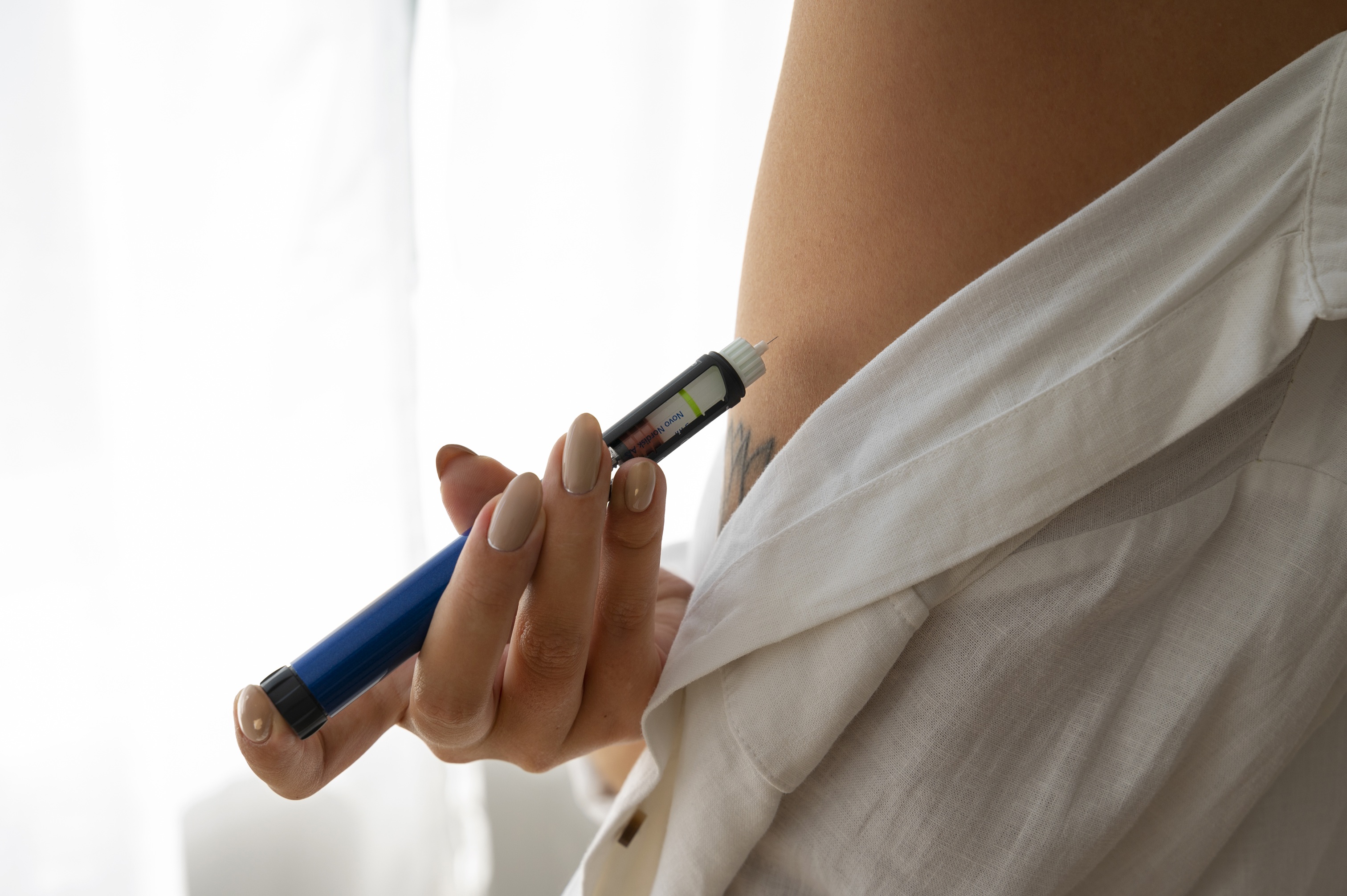
A familiar story repeats itself in my Perth weight loss surgery consulting rooms. A patient starts Ozempic Perth patients have been accessing for weight management. The first three months bring excellent results: the scale moves down, clothes loosen, and confidence climbs. Then, somewhere around the nine-month mark, the weight loss grinds to a halt. The patient still injects weekly, but the side effects persist, and the scale refuses to budge. This frustrating phenomenon has a name: the Ozempic plateau.
I have seen this scenario. Patients believe they have somehow failed, or that the medication has suddenly stopped working. Neither is true. The plateau is a predictable physiological event that clinicians have documented across multiple large-scale trials. Understanding why it happens and knowing what to do next can save you months of frustration and wasted money.
Let me give you a clear definition. An Ozempic plateau describes a period where your weight loss slows to a crawl or stops completely, even though you remain on a stable dose and have not changed your eating habits. Clinicians typically define a true plateau as no weight change for six to eight weeks or longer. Shorter stalls of a week or two simply reflect normal fluctuations in water retention, bowel contents, and hormonal cycles. Do not panic at a single week of static numbers. But when the scale refuses to move for a month or more, you have likely hit a genuine plateau.
The research tells us this affects a large proportion of users. Studies show that 30 to 40% of patients experience a plateau after six to twelve months of treatment, as GLP-1 receptors become less responsive to semaglutide over time. It is the expected trajectory for a minority of people taking these drugs.
The plateau occurs for three interlocking reasons, none of which indicate medication failure. First, a smaller body burns fewer calories. This sounds obvious, but many patients overlook its implications. A 100-kilogram person requires substantially more energy each day than a 75-kilogram person. When you lose weight, your basal metabolic rate drops in direct proportion to your reduced mass. The same daily calorie intake that produced weight loss of 100 kilograms now merely maintains weight at 75 kilograms. The medication continues suppressing your appetite, but your body's energy requirements have fallen below your intake.
Second, metabolic adaptation kicks in. Beyond the simple reduction in body size, your body actively becomes more energy-efficient during weight loss. Researchers call this adaptive thermogenesis. Your resting metabolic rate drops more than the new body size alone would predict. Your spontaneous physical movement (non-exercise activity) decreases without you even noticing. Your muscles burn fewer calories to perform the same tasks. These adaptations helped your ancestors survive famines. Today, they actively work against your weight loss goals.
Third, the medication's appetite suppression eventually stabilises. Ozempic works by mimicking GLP-1, a hormone that slows stomach emptying and signals fullness to the brain. But the body adapts to this signal over time. The GLP-1 receptors become less sensitive, requiring a higher dose to achieve the same effect. This is why the standard dosing schedule escalates from 0.25mg to 0.5mg to 1.0mg over several months. Once you reach the maximum tolerated dose, however, you have nowhere left to escalate. The weight loss then naturally plateaus.
The large clinical trials give us precise numbers on when plateaus occur. In the STEP trial for semaglutide (Wegovy), participants experienced their fastest weight loss during the first three to six months, followed by a gradual slowing, with maximum weight loss achieved around 60 weeks (approximately 14 months). For tirzepatide (Mounjaro), the SURMOUNT trials showed weight loss continuing for 17 to 18 months before plateauing at approximately 22.5% total body weight loss. Semaglutide plateaued earlier, at 9.7-14.9% over a similar timeframe.
What does this mean for you? If you have been on Ozempic Perth patients have relied upon for 12 to 18 months, and your weight has stabilised, you have likely reached the maximum benefit this drug can offer. Continuing the medication will not produce further loss. It will simply maintain your current weight. That represents a success of sorts, but for many patients, it falls short of their goals.
Here is the hard truth that many patients resist accepting. For a substantial proportion of people, the Ozempic plateau represents the maximum therapeutic effect of the drug. No amount of protein shakes, gym sessions, or dose escalations will produce further loss. Your body has reached a new settling point, and the medication cannot push you past it.
For patients who hit the Ozempic plateau and still have significant weight to lose, bariatric surgery offers a different pathway. Unlike GLP-1 medications, which eventually reach a ceiling effect, surgery continues producing weight loss for 12 to 18 months post-operation, and the results persist for decades.
Surgery avoids the rebound effect. When patients stop Ozempic, approximately 50% of the lost weight returns within one year. Surgery produces permanent anatomical changes that do not reverse when you stop paying for medication.
How do you decide which path suits you? Ask yourself these three questions.
First, have you reached a stable plateau that has lasted three months or more? If your weight has not changed for a full quarter despite consistent medication use and honest lifestyle efforts, you have likely exhausted the drug's potential.
Second, does your current weight still pose health risks? If your BMI remains above 35, or if you still struggle with obesity-related conditions like sleep apnoea, hypertension, or type 2 diabetes, then maintaining at this weight does not represent success. You need further intervention.
Third, can you afford indefinite use of medication? Ozempic costs $130 to $200 per month for weight loss use, as the PBS does not subsidise it for this indication. Over five years, that totals $7,800 to $12,000, with no end in sight. Bariatric surgery requires a larger upfront payment but stops costing you money after the first year.
For Ozempic Perth patients, the medication landscape remains complex. The TGA has declared the Ozempic shortage resolved, but intermittent regional shortages persist, particularly for starter doses. Patients already established on the drug generally maintain access, but new prescriptions face ongoing scrutiny. Wegovy, the higher-dose semaglutide specifically approved for weight loss, has received PBS listing only for patients with severe obesity and a prior cardiovascular event like a heart attack or stroke. The vast majority of weight loss patients do not qualify for this subsidy.
This means most Perth patients pay full price for Ozempic indefinitely, with no guarantee of continued supply and no pathway to a higher-strength product unless they meet strict cardiovascular criteria. These practical constraints make the surgical option increasingly attractive for patients who have plateaued on medication.
The Ozempic plateau frustrates everyone who experiences it, but understanding its causes removes the shame and confusion. Your body has not failed, and the medication has not stopped working. You have simply reached the natural limit of what this drug can achieve for your physiology. For some patients, that limit aligns perfectly with their health goals. But for others, it falls frustratingly short.
If you have hit the Ozempic plateau and still carry excess weight, bariatric surgery offers a proven, durable pathway to further loss that medication cannot provide. The data show surgery produces nearly double the weight loss of even the strongest GLP-1 medications, and those results persist for a decade or more.
At New Me in Perth, we help patients transition from temporary medication use to permanent surgical solutions. Our team will assess your plateau, review your medical history, and provide honest guidance about whether bariatric surgery offers the breakthrough you need. We also work with your private health insurance to minimise out-of-pocket expenses and support you through every stage of your transformation.

.svg)


.svg)
© 2025 New Me. All right reserved.
Follow Us On


Website by OKMG